
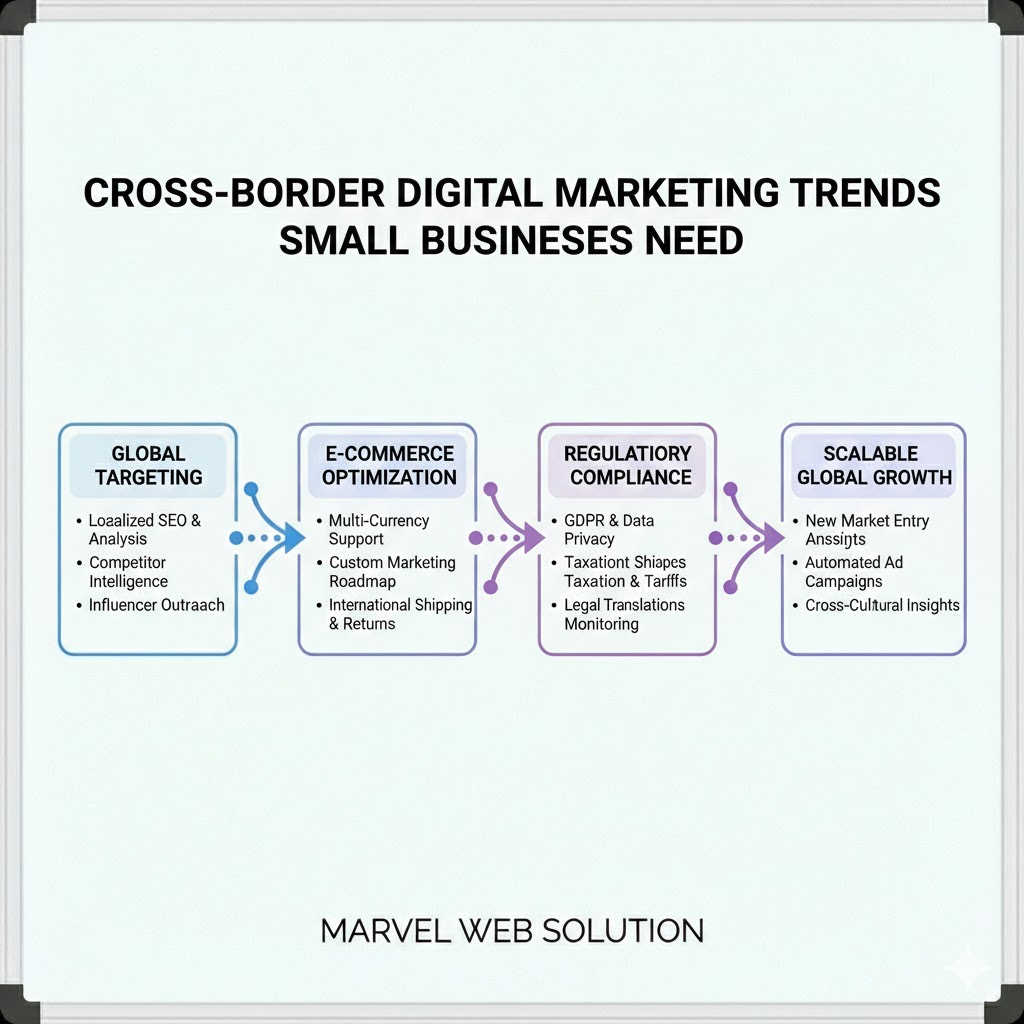
In today’s connected economy, geographical boundaries no longer limit business growth. Even small businesses now have the opportunity to reach customers across borders using digital marketing. However, entering international markets requires more than translating a website or running ads in another country. Cross-border digital marketing comes with its own trends, challenges, and strategic requirements that small businesses must understand to compete effectively.
As consumer behavior, search habits, and digital platforms vary by region, businesses that adapt to these differences gain a strong competitive advantage. This article explores the most important cross-border digital marketing trends small businesses need to follow to expand globally in a sustainable and profitable way.
Localization Over Simple Translation
One of the most critical shifts in cross-border marketing is the move from basic translation to full localization. Modern consumers expect brands to understand their culture, language nuances, and buying behavior.
Localization includes adapting website content, visuals, currency, payment methods, customer support language, and even tone of communication. A message that works in one country may fail completely in another if it ignores local customs or preferences. Search engines also prioritize localized content, making it essential for organic visibility in foreign markets.
Small businesses that invest in proper localization often see higher engagement, improved trust, and better conversion rates compared to those using generic global messaging.
International SEO Is Becoming Market-Specific
Search engine optimization for global audiences has evolved significantly. International SEO is no longer about ranking one website globally; it is about optimizing for individual regions and languages.
Different countries may favor different search engines, search terms, and ranking signals. Keyword intent also varies by region. A term with high commercial intent in one market might be informational in another. Businesses must conduct country-specific keyword research and use hreflang tags correctly to avoid duplicate content issues.
Technical SEO factors such as site speed, mobile optimization, and local hosting can also influence rankings in international search results. Small businesses that treat each target market as a separate SEO ecosystem tend to perform better long term.
Paid Advertising With Geo-Targeted Precision
Cross-border paid advertising is becoming more precise due to advancements in targeting and analytics. Platforms like Google Ads and social media networks now allow advertisers to target users by country, city, language, device type, and even local interests.
However, ad creatives and copy must be customized for each market. Pricing strategies, call-to-action phrases, and offers should reflect local purchasing power and expectations. What works in a high-income market may not convert in an emerging economy.
Small businesses are increasingly using A/B testing across regions to identify which messages resonate best, allowing them to scale profitable campaigns without wasting ad spend.
Social Media Platforms Differ by Region
Another major trend in cross-border digital marketing is the importance of choosing the right social media platforms. While some platforms dominate globally, others are region-specific and carry significant influence.
User behavior, content preferences, and engagement styles differ widely between regions. In some countries, video content drives engagement, while in others, long-form educational posts perform better. Posting frequency, timing, and influencer partnerships also vary.
Small businesses that research platform popularity and adapt their content strategy accordingly build stronger brand visibility and community trust in international markets.
Cross-Border E-Commerce Optimization
For small businesses selling products or services online, cross-border e-commerce optimization is becoming essential. Customers expect seamless checkout experiences, transparent shipping costs, and clear return policies regardless of location.
Payment preferences vary widely across countries. Some markets rely heavily on digital wallets, while others prefer credit cards or bank transfers. Offering locally trusted payment options increases conversion rates significantly.
Logistics transparency is also a growing expectation. Clear delivery timelines, customs information, and localized customer support help reduce friction and build confidence among international buyers.
Data Privacy and Compliance Awareness
As businesses expand globally, data privacy regulations become more complex. Different regions enforce different laws related to user data collection, storage, and usage.
Compliance is no longer optional. Failing to follow regional regulations can result in penalties, reputation damage, and loss of customer trust. Small businesses must ensure their websites, forms, cookies, and email marketing practices align with local legal requirements.
Transparency in data usage and strong cybersecurity practices are increasingly influencing customer decisions, making compliance a competitive advantage rather than just a legal necessity.
AI and Automation in Global Campaigns
Artificial intelligence and marketing automation are playing a growing role in cross-border digital strategies. AI tools help businesses analyze international customer data, predict behavior, and personalize content at scale.
Automation enables small businesses to manage campaigns across multiple regions without increasing operational complexity. Email segmentation, ad bidding, chatbot support, and customer journey mapping can all be optimized using intelligent systems.
When used strategically, AI allows small businesses to compete with larger brands by delivering personalized experiences across borders efficiently.
Building Trust Through Local Authority Signals
Trust is a key factor in international marketing success. Consumers are more likely to engage with brands that demonstrate local credibility.
This includes earning backlinks from regional websites, getting listed in local directories, collaborating with regional influencers, and publishing content relevant to local audiences. Reviews and testimonials from customers in the target market also significantly impact purchasing decisions.
Small businesses that focus on building local authority rather than relying solely on global branding see stronger long-term growth in international markets.
Strategic Partnerships for Global Growth
Another emerging trend is collaboration with local partners. Working with regional agencies, distributors, or consultants helps businesses understand market dynamics faster and avoid costly mistakes.
Local partners provide insights into consumer behavior, competitive landscapes, and regulatory requirements. This approach reduces risk and accelerates market entry for small businesses exploring cross-border expansion.
Digital marketing agencies with global experience can play a vital role in aligning strategy, execution, and performance tracking across regions.
Choosing the Right Digital Marketing Support
Cross-border digital marketing requires expertise across SEO, paid media, content strategy, analytics, and compliance. For small businesses, managing all of this internally can be challenging.
Partnering with an experienced digital marketing provider ensures campaigns are structured for scalability and long-term success. A company like Marvel Web Solution helps businesses navigate international markets with data-driven strategies, localized execution, and performance-focused optimization.
By combining technical expertise with market-specific insights, Marvel Web Solution enables small businesses to expand beyond borders while maintaining brand consistency and measurable growth.
Conclusion
Cross-border digital marketing is no longer reserved for large enterprises. With the right strategy, tools, and execution, small businesses can compete globally and build sustainable international revenue streams.
Understanding localization, international SEO, regional advertising, platform preferences, compliance, and automation is essential for success. Businesses that adapt to these trends early position themselves as trusted global brands rather than temporary market entrants.
As global digital competition increases, small businesses that invest in smart cross-border marketing strategies today will lead their industries tomorrow.