
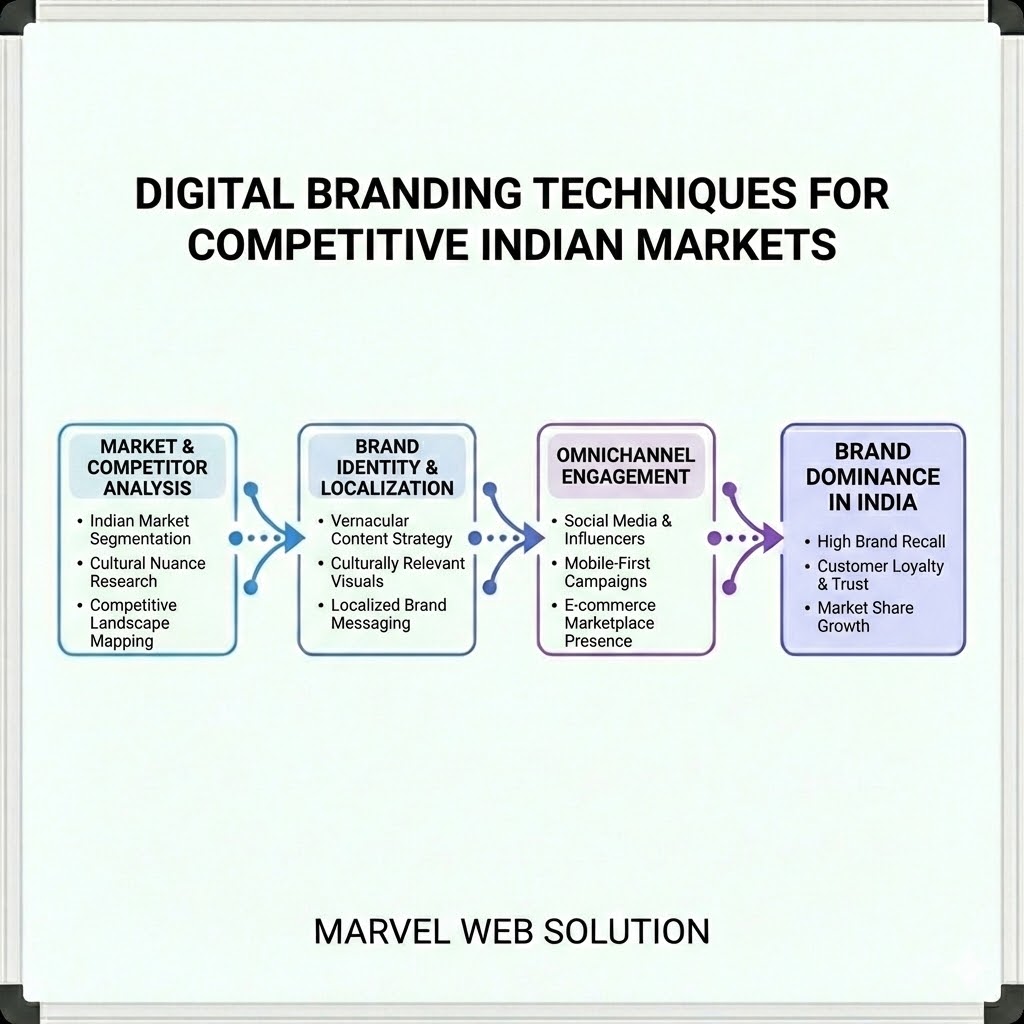
India’s digital ecosystem is one of the most competitive in the world. With millions of businesses fighting for attention across search engines, social media platforms, and marketplaces, digital branding has become a critical growth lever rather than a supporting activity. In such a crowded landscape, brands that rely only on basic online presence often struggle to stand out. What drives success today is a clear, consistent, and strategically executed digital brand identity.
Digital branding goes beyond logos and color palettes. It is about how a business communicates its value, builds trust, and creates memorable experiences across every digital touchpoint. For Indian markets, where audiences are diverse, price-sensitive, and highly informed, effective digital branding can directly influence credibility, customer loyalty, and revenue growth.
Understanding the Indian Digital Consumer
Indian consumers interact with brands across multiple platforms before making decisions. A typical customer may discover a brand on social media, research it on Google, check reviews, visit the website, and then compare competitors. Each of these touchpoints contributes to brand perception.
Digital branding techniques must be designed with this multi-channel behavior in mind. Consistency across platforms reassures users, while clarity in messaging helps brands communicate value quickly. In competitive Indian markets, businesses that simplify their brand message and align it with customer expectations gain an immediate advantage.
Building a Clear and Consistent Brand Identity
A strong digital brand begins with clarity. Businesses must define their brand purpose, tone, and positioning before executing marketing campaigns. This clarity ensures that all digital assets reflect a unified identity.
Consistency in visual elements such as typography, colors, imagery, and layout helps users instantly recognize a brand. Equally important is consistency in messaging. Whether a customer reads a blog, sees a social media post, or lands on a website, the brand voice should feel familiar and trustworthy.
In Indian markets, where competition is intense, consistency helps brands remain memorable and credible over time.
Website as the Core Branding Asset
A website is often the first point of serious engagement between a brand and a potential customer. In digital branding, the website acts as the central hub that connects all marketing efforts.
An effective branded website communicates professionalism, reliability, and value within seconds. Clean design, intuitive navigation, fast loading speed, and clear calls to action are essential. Content should focus on solving user problems rather than simply promoting services.
For Indian businesses, websites must also cater to mobile users, regional audiences, and varying internet speeds. A well-optimized website strengthens brand perception and supports long-term growth.
Content-Driven Brand Authority
Content marketing plays a major role in digital branding. Educational and informative content positions businesses as experts rather than sellers. Blogs, guides, case studies, and videos help build authority and trust over time.
In competitive Indian markets, customers prefer brands that provide value before asking for a sale. Consistently publishing high-quality content improves visibility, strengthens credibility, and encourages repeat engagement.
Content also supports other branding efforts by reinforcing messaging, improving search presence, and driving organic traffic.
Social Media as a Brand Personality Channel
Social media platforms allow brands to express personality and engage directly with audiences. Effective digital branding on social media focuses on storytelling, interaction, and relevance rather than constant promotion.
Indian audiences respond well to brands that are approachable, informative, and culturally aware. Sharing behind-the-scenes insights, customer stories, industry updates, and thought leadership content humanizes a brand and builds emotional connections.
Consistency in posting style, tone, and visuals reinforces brand identity and improves recognition across platforms.
Search Visibility and Brand Trust
Search engine presence has a direct impact on brand credibility. When users consistently see a brand ranking on search results, it creates familiarity and trust. Digital branding techniques must therefore integrate SEO as a foundational element.
Optimized website structure, relevant content, and strong technical performance improve both visibility and user experience. For Indian markets, local and regional optimization further enhances brand relevance and reach.
Brands that invest in search visibility benefit from sustained awareness and long-term authority in their niche.
User Experience as a Branding Tool
User experience influences how people remember a brand. A confusing website, slow load times, or unclear communication can damage brand perception instantly. On the other hand, smooth navigation, clear information, and responsive design create positive associations.
Digital branding techniques increasingly prioritize user-centric design. This includes easy access to information, simplified forms, clear pricing communication, and responsive support channels.
In competitive markets, superior user experience can differentiate a brand even when products or services are similar.
Leveraging Data for Brand Optimization
Data-driven insights help brands refine their digital identity over time. Analytics tools provide information about user behavior, preferences, and engagement patterns across platforms.
By analyzing this data, businesses can adjust messaging, content strategy, and design elements to better align with audience expectations. Continuous optimization ensures that digital branding remains relevant as markets evolve.
Indian markets change rapidly, making adaptability a key branding strength.
Trust Signals and Online Reputation
Trust plays a major role in purchase decisions, especially in India where customers often research extensively before committing. Digital branding techniques should highlight trust signals such as testimonials, reviews, certifications, and case studies.
Transparent communication, consistent branding, and responsive interaction further reinforce credibility. Over time, a strong online reputation becomes one of the most valuable branding assets for a business.
Partnering With the Right Digital Branding Experts
Executing effective digital branding requires strategic thinking, technical expertise, and creative execution. Many businesses struggle to manage all aspects internally, making professional guidance valuable.
Working with an experienced agency like Marvel Web Solution helps businesses align branding, marketing, and technology under a unified strategy. Their approach focuses on building digital identities that are not only visually appealing but also performance-driven and scalable.
With the right partner, brands can implement proven digital branding techniques while staying aligned with business goals and market demands.
Long-Term Impact of Strong Digital Branding
Digital branding is not a one-time activity. It is a continuous process that evolves with customer expectations, technology, and competition. Businesses that invest in long-term branding strategies build recognition, loyalty, and resilience.
In competitive Indian markets, strong digital branding reduces dependency on price competition and short-term promotions. Instead, it creates lasting value by positioning brands as trusted leaders in their space.
By adopting structured branding techniques and working with experts like Marvel Web Solution, businesses can strengthen their digital presence, stand out in crowded markets, and achieve sustainable growth in the evolving Indian digital economy.