
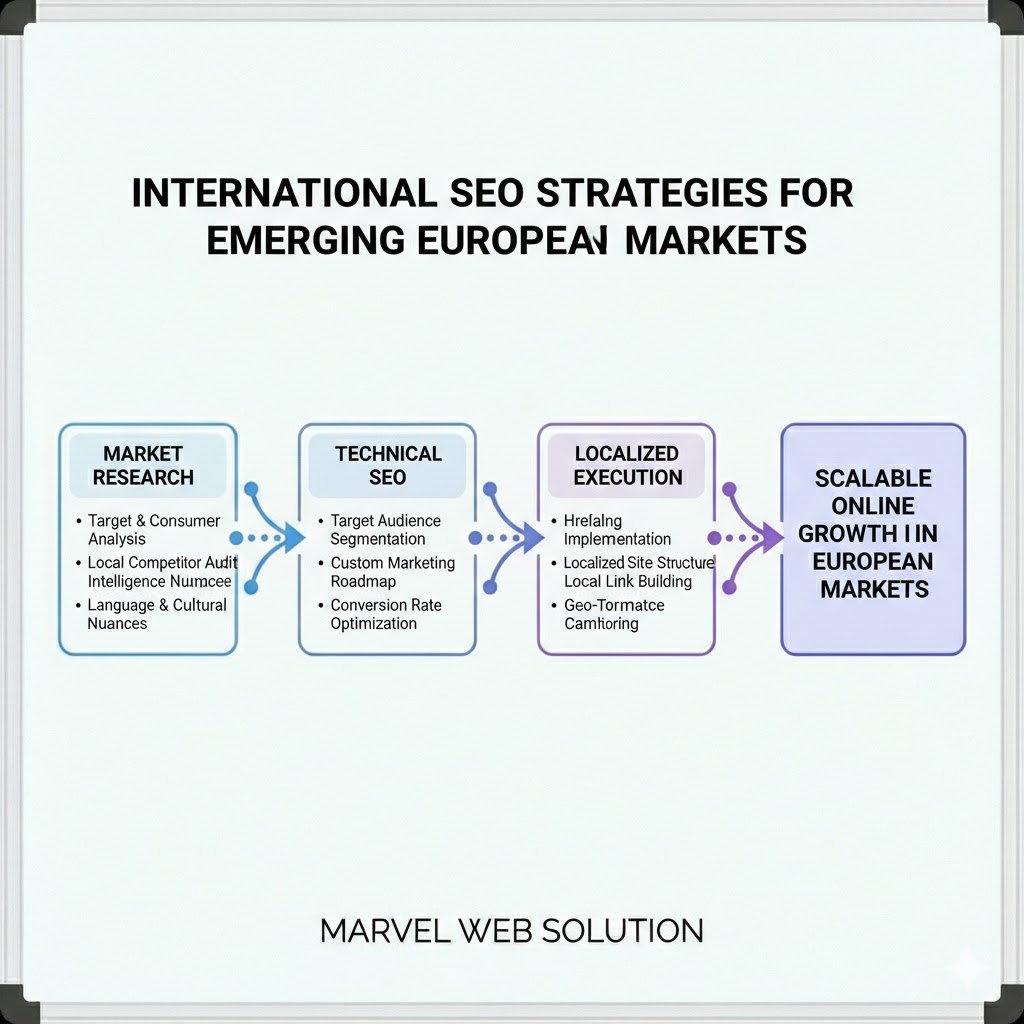
As digital competition intensifies across Europe, emerging markets are quickly becoming high-potential territories for global brands, SaaS companies, agencies, and service providers. Countries in Eastern and Southern Europe are experiencing rapid internet adoption, improved digital infrastructure, and a growing appetite for online services. However, ranking in these regions requires more than simply translating existing content or targeting generic keywords. It demands a well-structured international SEO strategy tailored to local search behavior, languages, platforms, and cultural nuances.
International SEO is not a one-size-fits-all solution. Emerging European markets present unique challenges and opportunities that require careful planning, research, and execution. Businesses that understand these dynamics early can establish strong organic visibility before competition becomes saturated.
Understanding What Makes Emerging European Markets Different
Unlike mature SEO markets such as the United States, United Kingdom, or Germany, emerging European markets often show different user intent patterns, lower keyword competition, and varied trust signals. Searchers in these regions may prioritize local relevance, language accuracy, and familiarity with brands over global authority.
In many cases, businesses are still transitioning from offline to online discovery. This creates an opportunity for companies willing to invest in educational content, localized landing pages, and region-specific keyword strategies. However, it also means that technical SEO errors, incorrect language targeting, or poorly localized content can significantly impact rankings and conversions.
Market Research Before Keyword Research
The foundation of successful international SEO starts with market research, not keywords. Understanding the economic landscape, digital maturity, and consumer behavior of each country is essential. For example, some markets may rely heavily on mobile search, while others still prefer desktop browsing. Payment preferences, trust in online brands, and content consumption habits can also vary widely.
Once market research is complete, keyword research should be conducted using local language tools and regional search engines where applicable. Direct translations of English keywords often fail to capture real search intent. Native phrasing, slang, and country-specific modifiers play a crucial role in ranking effectively.
Language Targeting And Content Localization
One of the most common mistakes in international SEO is confusing translation with localization. Translation focuses on converting words, while localization adapts content to cultural expectations, tone, and local context. Emerging European audiences are quick to disengage from content that feels generic or foreign.
Localized content should reflect regional terminology, currency formats, business practices, and even local examples. Blog posts, service pages, and FAQs must be rewritten, not reused. This approach improves dwell time, reduces bounce rates, and sends stronger relevance signals to search engines.
Implementing proper hreflang tags is also critical. These tags help search engines understand which version of a page to show to users in specific regions and languages, preventing duplicate content issues and incorrect rankings.
Choosing The Right Domain Structure
Domain structure plays a significant role in international SEO success. Businesses typically choose between country-code top-level domains, subdomains, or subdirectories. Each option has advantages and limitations depending on budget, branding goals, and long-term scalability.
Country-specific domains often build trust faster in emerging markets but require more resources to maintain. Subdirectories can be easier to manage and benefit from shared domain authority, making them a popular choice for companies entering multiple European regions simultaneously.
The key is consistency. Once a structure is chosen, it should be supported by localized content, internal linking, and country-specific SEO signals to strengthen regional relevance.
Technical SEO As A Competitive Advantage
In emerging European markets, technical SEO can be a major differentiator. Many local competitors may overlook site speed, mobile optimization, structured data, and clean URL structures. This creates an opportunity for international brands to gain an edge through strong technical foundations.
Optimizing for mobile performance is especially important, as many users in these regions access the internet primarily through smartphones. Fast loading times, simple navigation, and optimized images directly influence rankings and user engagement.
Additionally, ensuring proper indexation, XML sitemaps, and localized schema markup helps search engines understand content relevance and improves visibility in regional search results.
Local Link Building And Digital PR
Backlinks remain one of the strongest ranking signals, but international link building requires a localized approach. High-quality links from regional news sites, business directories, industry blogs, and local partnerships are far more valuable than generic global links.
Emerging European markets often have strong local communities and niche publications that are open to collaboration. Guest articles, local sponsorships, and digital PR campaigns focused on regional issues can generate authoritative backlinks while increasing brand recognition.
Trust is a critical factor. Search engines and users alike respond positively to brands that demonstrate genuine local presence rather than appearing as distant international entities.
Leveraging Local Search And Google Business Profiles
For service-based businesses and agencies, local search optimization is a powerful growth driver. Even international companies can benefit from localized Google Business Profiles in key cities or regions. Accurate business information, localized descriptions, and region-specific reviews improve visibility in map results and local packs.
In emerging European markets, online reviews often carry significant influence due to smaller competitive landscapes. Encouraging satisfied clients to leave reviews in local languages strengthens credibility and boosts conversion rates.
Measuring Performance With Regional Metrics
Tracking international SEO success requires more than monitoring global traffic. Performance should be evaluated at the country, language, and city level. Metrics such as localized keyword rankings, organic conversions by region, and engagement rates provide clearer insights into what is working.
Search Console, analytics platforms, and region-specific SEO tools should be configured properly to avoid data misinterpretation. Regular audits help identify underperforming regions and optimization opportunities before issues scale.
Scaling International SEO The Right Way
Once traction is achieved in one or two emerging European markets, scaling should be intentional. Expanding too quickly without proper localization, technical readiness, or link support can dilute results. A phased approach allows businesses to refine strategies, reuse successful frameworks, and maintain quality.
Agencies and brands that invest in long-term international SEO build sustainable visibility that compounds over time. With lower competition and growing digital adoption, emerging European markets offer strong return on investment when approached strategically.
This is where experienced SEO partners make a measurable difference. Marvel Web Solution helps businesses navigate international SEO complexities with data-driven strategies, localized execution, and scalable frameworks designed for long-term growth.
Final Thoughts
International SEO for emerging European markets is not about chasing volume alone. It is about relevance, trust, and precision. Brands that respect local languages, search behavior, and technical requirements gain early authority and long-lasting organic presence.
With the right research, localization strategy, technical foundation, and link acquisition plan, businesses can unlock new revenue streams across Europe. As competition grows, early adopters who implement structured international SEO today will dominate tomorrow’s search results.
Partnering with a results-focused agency like Marvel Web Solution ensures that international expansion is not just visible, but profitable, sustainable, and aligned with long-term business goals.