
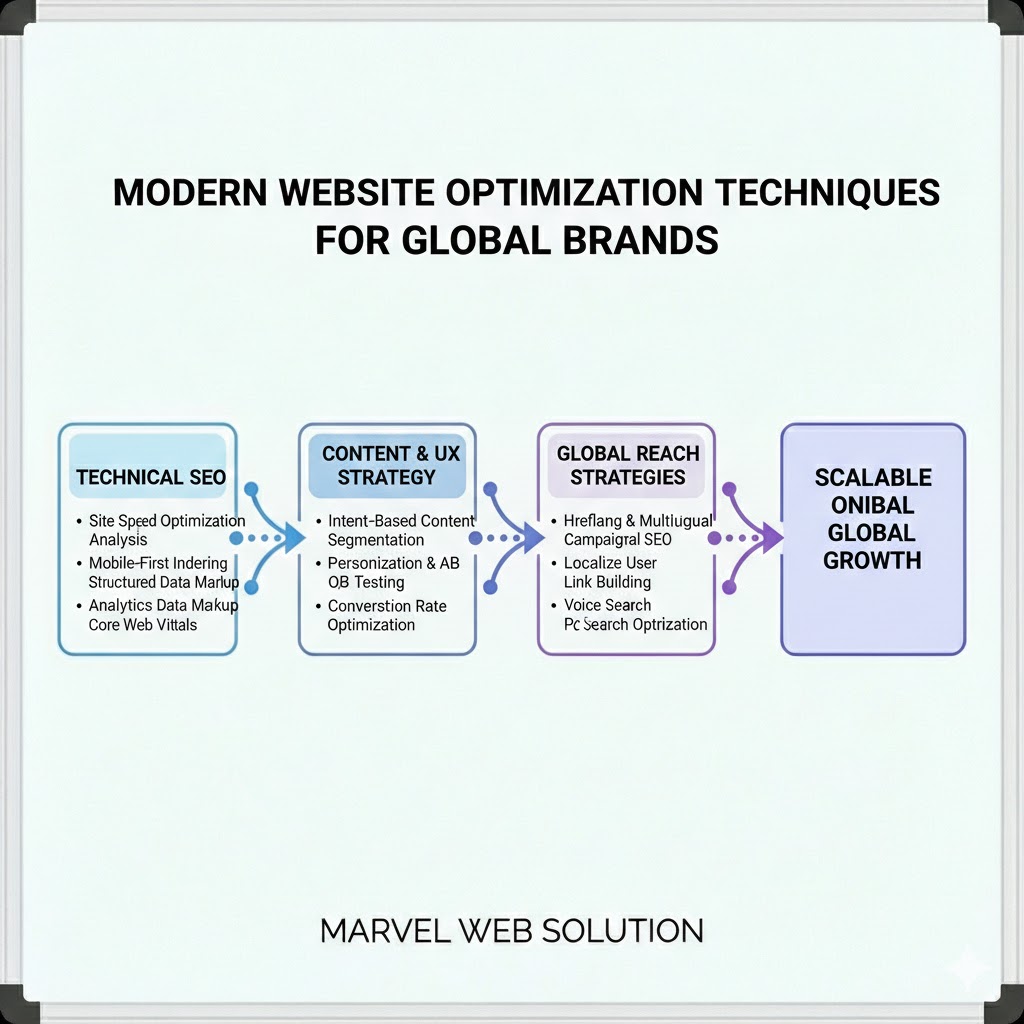
In today’s borderless digital economy, a website is no longer just an online brochure. For global brands, it is a performance-driven business asset that must load fast across continents, communicate clearly across cultures, and convert visitors regardless of language, device, or location. Website optimization has evolved far beyond basic SEO or aesthetic design. It now combines technology, user behavior, data analytics, and localization strategies to deliver measurable growth at scale.
Modern website optimization focuses on creating a seamless experience for users while meeting the technical expectations of search engines and performance benchmarks. For global brands competing in multiple regions, optimization becomes both a strategic and operational priority.
Understanding Global Website Optimization
Global website optimization is the process of improving a website’s performance, usability, visibility, and conversion potential across different countries and markets. Unlike local optimization, it must account for varying internet speeds, devices, cultural preferences, languages, and search behaviors.
A well-optimized global website balances three critical elements:
- Technical performance across regions
- User experience tailored to diverse audiences
- Strategic content and conversion pathways
Failing in any one of these areas can limit growth, reduce trust, and weaken brand authority in international markets.
Performance Optimization Across Regions
Website speed remains one of the most important optimization factors for global brands. Users in different regions experience different network conditions, and slow-loading websites often lose visitors before content even appears.
Modern techniques include the use of content delivery networks to distribute website resources closer to users geographically. Optimized image formats, intelligent caching, and server-side compression further reduce load times. Brands that prioritize performance optimization see lower bounce rates and higher engagement, especially in mobile-first markets.
Another key factor is minimizing unnecessary scripts and third-party integrations that slow down page rendering. Performance optimization is not a one-time task but an ongoing process that adapts as websites grow and technologies change.
Mobile-First and Device Optimization
Global audiences are increasingly mobile-driven, especially in emerging markets. A mobile-first approach ensures that websites are designed and optimized primarily for smartphones and tablets rather than desktop screens.
Modern optimization techniques focus on responsive layouts, touch-friendly navigation, fast-loading mobile pages, and simplified content structures. Adaptive design allows websites to adjust not only visually but functionally based on device capabilities.
Brands that neglect mobile optimization often lose credibility and conversions in regions where mobile is the primary access point to the internet.
Technical SEO for International Visibility
Search engine optimization for global brands goes beyond keyword placement. Technical SEO forms the foundation for international visibility and discoverability.
Key optimization techniques include structured site architecture, clean URLs, optimized internal linking, and proper indexing controls. For international websites, correct implementation of language and regional targeting is critical to avoid duplicate content issues and ranking conflicts.
Search engines rely on clear signals to understand which version of a website should be shown to users in different regions. When implemented correctly, technical SEO ensures consistent visibility across markets while protecting brand authority.
Localization and Cultural Adaptation
One of the most overlooked aspects of global website optimization is localization. Translation alone is not enough. Content must resonate culturally, linguistically, and contextually with each audience.
Modern optimization strategies involve adapting messaging, visuals, calls to action, and even navigation styles to match regional expectations. Colors, imagery, tone, and layout preferences vary significantly across cultures, and global brands must reflect these differences without compromising brand consistency.
Localized optimization increases trust, reduces friction, and significantly improves conversion rates.
User Experience Optimization
User experience is central to modern website optimization. Global brands must design intuitive journeys that guide users smoothly from entry to conversion.
This includes clear navigation, logical content hierarchy, fast interactions, and accessible design. Behavioral data such as scroll depth, session duration, and interaction patterns help identify friction points and optimization opportunities.
Advanced optimization techniques use heatmaps, user recordings, and A/B testing to refine layouts and messaging. Improving user experience not only boosts conversions but also strengthens brand perception globally.
Content Optimization for Global Audiences
Content remains a core driver of engagement and authority. For global brands, content optimization requires balancing scalability with relevance.
Modern approaches involve creating foundational content that can be adapted regionally rather than duplicated. This allows brands to maintain consistent messaging while addressing local needs.
Optimized content focuses on clarity, intent alignment, and structured formatting. It is designed to be easily scannable, accessible, and valuable across devices and languages. When combined with strategic keyword research for each market, content optimization supports both visibility and engagement.
Conversion Rate Optimization at Scale
Driving traffic is only half the challenge. Global brands must convert visitors into leads, customers, or subscribers consistently across markets.
Conversion rate optimization uses data-driven techniques to improve form designs, call-to-action placement, messaging clarity, and trust signals. Global brands often test variations across regions to identify what resonates best with different audiences.
Localized testimonials, region-specific offers, and tailored value propositions can significantly impact conversion performance. Modern optimization focuses on continuous testing and refinement rather than static design decisions.
Security and Trust Optimization
Trust plays a crucial role in global website performance. Users are increasingly cautious about data privacy, payment security, and brand credibility.
Modern optimization includes implementing secure protocols, transparent privacy policies, and region-compliant data practices. Visual trust indicators, clear contact information, and professional design all contribute to user confidence.
Search engines also favor secure, well-maintained websites, making trust optimization essential for both users and rankings.
Analytics and Continuous Improvement
Website optimization is never complete. Global brands rely on advanced analytics to monitor performance, identify trends, and guide optimization decisions.
Modern analytics platforms allow segmentation by region, device, and behavior, providing actionable insights into how different audiences interact with the website. These insights drive continuous improvement, ensuring the website evolves alongside market expectations.
Data-driven optimization enables brands to allocate resources efficiently and scale success across regions.
Partnering With the Right Optimization Experts
Executing modern website optimization at a global level requires technical expertise, strategic insight, and ongoing support. Many brands choose to work with specialized digital partners to ensure consistent performance and measurable results.
Marvel Web Solution helps global brands implement advanced website optimization strategies that combine performance, usability, and growth-focused design. With experience across diverse markets and industries, the team focuses on creating websites that not only look professional but perform reliably worldwide.
By aligning technical excellence with user-centric optimization, Marvel Web Solution supports brands in building scalable digital platforms that drive long-term success.
Conclusion
Modern website optimization is a multidimensional discipline that blends technology, user experience, localization, and data analysis. For global brands, it is no longer optional but essential for sustained growth and competitive advantage.
A well-optimized website delivers faster performance, stronger visibility, higher engagement, and improved conversions across markets. By investing in modern optimization techniques and working with experienced partners like Marvel Web Solution, global brands can transform their websites into powerful engines of international growth.